Blog

Glorious Summer Sun & Hail?

One day, you’re outside lounging by the poolside, and the next, you’re picking up pieces of your roof and siding from your yard. 

If this sounds familiar, we get it. Life in Calgary is bittersweet. We get to enjoy the most sun in the whole country, but it comes with a price.

So, what can you do to protect your home from inclement weather like hail?

If you’re installing new roofing or siding after a storm, or it’s time for an upgrade, you can consider using higher-grade material that is made to withstand the damaging effects of rogue hail and extreme winter conditions—even in the middle of summer.

Choosing the Right Shingles

If your roof or shingles need replacing, you shouldn’t hesitate to get the job done. If you wait too long, leaks can develop without your knowledge. Water and moisture can seep into your roof, attic, and eventually into your home, causing organic growth and other damage along the way.

When it comes to choosing the shingles to use on your home, there are a few weather-resistant options you can decide on.

Calgary offers a $3,000 roof rebate for homeowners whose roof was damaged by hail, and insurance will cover some, if not all, of the damage as well, so there’s really no reason to not fix your roof before it becomes a problem.

Shingles Come in 4 Varieties

  • Asphalt
  • Slate
  • Metal
  • Rubber

The type you choose should be resistant to the weather in your area. In Calgary, asphalt shingles are common because they come with a Class 4 rating, meaning they can withstand the elements a little better than lower ratings.

Rubber shingles are made from 70% recycled tire rubber and may cost more than asphalt. However a locally-manufactured product, like Euroshield rubber roofing, is able to withstand the impact from a steel ball being dropped from 20 feet, so you know hail won’t stand a chance against your roof.

The best way to ensure you are getting a hail-resistant roof is to talk to your roofing contractor. They will be able to go over the ins and outs of what type of shingles is suitable for your home. 

Have a look around your neighbourhood if you aren’t sure what types of shingles to get. Do your neighbours have asphalt shingles, slate, rubber or metal? Contractors who are familiar with your weather will likely make similar recommendations for your neighbours as well.

House sidings in new home showing vinyl and stone veneers.

Choosing the Right Siding

Finding the right siding for your house can be tricky. We know that looks matter, so when you’re deciding, you will likely weigh aesthetic and practical considerations.

The 4 most popular choices are:

Vinyl

Vinyl siding is a very common choice of material in Calgary. It is easy to work with, comes in a multitude of colours, is durable, and doesn’t cost a lot to install. You can wash away dirt, and you won’t have to worry about repainting.

Vinyl siding can be punctured by hail, but it is also versatile and easy to replace. If you choose a generic colour, you can typically purchase new pieces to match. 

Hardie Board

Siding from JamesHardie comes in a few varieties, but one thing stays the same: this product withstands the inclement Calgary weather we all know.

Available in:

Made from fiber-cement material, this siding protects your home without sacrificing character and style.

Composite

Composite is made of wood and has that natural look to it. Although it is nice to look at, it does break down and rot and can attract insects and trap moisture. Composite wood can last for a long time if it is properly taken care of.

Composite wood is relatively strong, but hail can leave dents and divots in the wood. If hail cracks or penetrates the wood, it can lead to moisture entering the space between your siding and the barrier of your home. Wooden pieces should be replaced as quickly as possible to avoid further damage. Oftentimes, a new piece of wood will not match an existing piece.

Stone Veneer

Stone veneer is made of lightweight concrete and can be a very cost-effective option.

Stone veneer is very strong and can deflect hail from damaging your home. However, cracks and damage can lead to moisture entering in between the siding and the barrier of your home. Cracks should be mended right away with putty, and it doesn’t always look exactly as it used to.

Making Your Choice

When it hails, all 4 types of siding can be punctured with holes or damaged in other ways. How you choose will depend on how much maintenance you are willing to put in.

Hiring a Professional

A licensed contractor will be able to help you decide which shingles and siding you should use. If you live in an area like Calgary, a local contractor will be able to provide you with the best recommendations that will help protect your home as best as possible from hail, wind, rain, snow, and sun—yes, even UV rays can damage your home!

If your home has been damaged by hail—or if your materials are aging—it may be time for an upgrade. Contact your local professional contractors to discuss your options and receive a quote.

What Are Ice Dams?

Whether you’re a fan of winter or not, there’s no denying hanging icicles and frost are enchanting. But those beautiful icicles hanging off your eaves are hiding something a bit more serious: ice dams

Ice dams are ridges of ice that form along the edge of your roof and prevent melted snow and water from draining. 

Ice dams may not seem that bad, but they can weigh an extraordinary amount, compromising the structure of your roof and home.

What Causes Ice Dams?

Ice dams form when heat loss, snow cover, and outside temperatures interact, causing snow to melt and refreeze. Essentially, they form when warm areas of the roof cause snow to melt and run into cold regions on the roof where it refreezes.

These warm spots are caused by heat flowing through the ceiling to the roof or the bright sun warming the roof shingles, even if the air temperature is below freezing. Weather patterns can also be responsible for melting and freezing snow. 

Many Calgarians are familiar with this common phenomenon. Our colder winters combined with chinooks that bring in warmer air causes periods of melt that cause slow runoff with plenty of time to refreeze. 

Can Ice Dams Cause Damage?

Ice dams can cause water to back up and seep under shingles. From there, this meltwater can run into the house, ruining ceilings and walls. Aside from stripping paint and wrecking insulation, collected moisture can also cause mold and mildew to grow. 

When large ice dams break off, they can take shingles and gutters with them. They can also damage anything they land on, like bushes, windowsills, cars, or even people and pets. 

How to Fix & Prevent Ice Dams

Preventing Ice Dams

Prevention is the best medicine, as the saying goes. Steps to prevent ice dams from forming include: 

  1. Making your ceiling airtight by sealing leaks where warm air can escape through the ceiling to below the roof decking.
  2. Increasing insulation in your living spaces to prevent heat loss through your ceiling.
  3. Improving insulation in your attic space to prevent heat loss through your roof.
  4. Adding ventilation in the space between insulation and roof decking. Ventilation will carry away any warm air that leaks through your ceiling. 

Heat-Lines

Adding Heat-Lines to your roof is one of the best ways to prevent ice dams. Heat-Lines provide freeze protection for your roof, gutters, and pipes by melting excess ice and snow. Once installed, Heat-Lines can be a permanent solution to ice dam problems. 
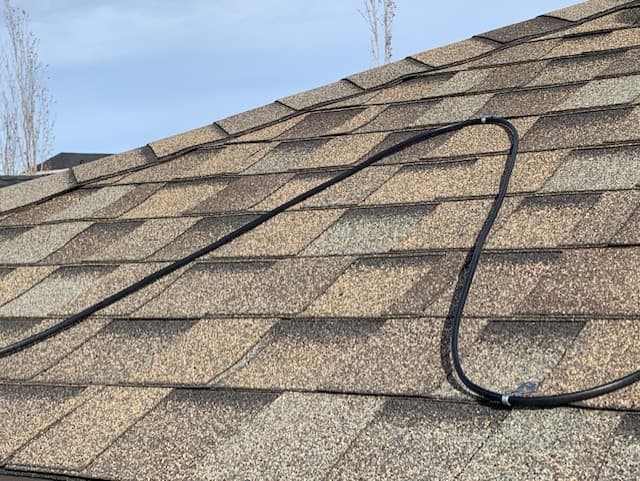
Heat-Line installation to prevent ice dams
Heat-Line melting ice and snow to prevent ice dams

Fixing Ice Dams

It doesn’t take much heat to raise your roof temperature above 0℃. Even if you do everything right with ventilating or insulating your home, ice dams can form anyway. Just a little bit of warm air from your attic or some radiant heat from the sun can warm your roof enough to melt accumulated snow. 

If you see ice dams forming on your roof, you can take some steps to stop them from getting worse:

  1. Hire a professional to come out and remove ice dams before they cause damage. 
  2. You can remove small ice dams by breaking them into smaller pieces using a mallet. DO NOT use a sharp tool, like an ax or knife, because they can damage shingles and your roof. Breaking up ice dams is dangerous work, so take caution. 
  3. Clear your gutters and downspouts of snow, debris, and ice. If your gutters and downspouts are clogged, melting snow has nowhere to go. Again, this is dangerous work, especially in winter conditions, so do this with caution. You can also install a continuous hanger system, which can also help prevent debris and snow build-up in your gutters. 
  4. Using a long-handled rake, remove snow from the last 4 feet of your roof after heavy snowfalls. Use light pressure so you don’t inadvertently damage your shingles. NEVER get up onto your roof to remove snow in the winter. If there’s no snow, there’s nothing to melt and create an ice dam.

When Worried About Ice Dams, Hire a Professional

This may all sound overwhelming when all you want to do is prevent leakage into your home. But the good news that roofing, ventilation, and insulation professionals are available to help in just these types of situations! 

Roofing and exterior professionals have the experience and knowledge to safely work on roofs in winter conditions and know how to avoid damaging your roof or house. 

When a house is tightened up to prevent heat loss, professionals also know the appropriate steps for ensuring your ventilation systems and exhausting devices have enough space and air to operate effectively and safely. If you’ve ever struggled with ice dams, or you’re worried about the chances of them forming on your roof (especially on these warmer winter days), don’t wait to have a professional come and check out your home! It could save you a headache in the future.